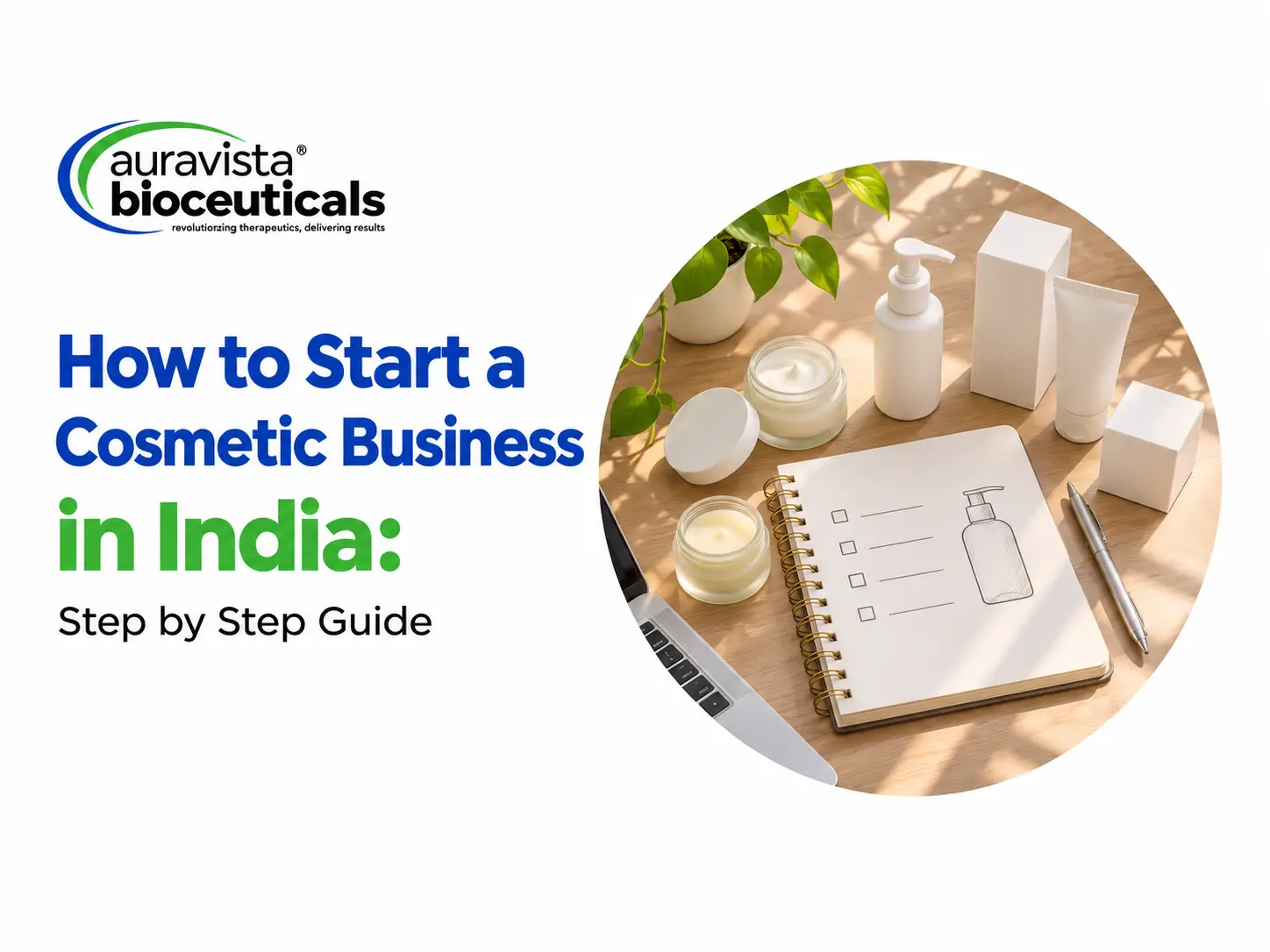
Starting a cosmetic business in India is a dream for many founders, salon owners, clinic owners and online sellers. The demand is real: Indian buyers now read ingredient lists, compare brands on Instagram and order skin care online every week. But most first-time founders get stuck on the same questions. How much money do I need? Do I need a factory? Which licence applies to me? What if my first batch does not sell?
This guide answers those questions step by step. It explains how to start a cosmetic business without building your own plant, by working with third party manufacturing cosmetics partners who produce, fill and pack products under your brand name. Whether you want to launch from home with two products or start a full range for retail, the steps are the same.
Why a Cosmetic Business Makes Sense in India Today
Skin care, hair care and personal care are some of the fastest moving categories in Indian retail. New brands launch every month on marketplaces, quick commerce apps and their own websites. Buyers are open to trying new names if the product looks trustworthy, the label is clear and the price feels fair.
The good news for new founders is that you no longer need a factory, a lab or a large team to enter this market. Third party and private label manufacturing lets you focus on brand, product choice and selling, while a licensed manufacturer handles formulation, production and packing. That is how most new Indian cosmetic brands start today.
Step 1: Pick Your Niche and Your Buyer
The most common mistake is trying to sell everything to everyone. Start with one clear buyer and one clear problem. For example:
- Young buyers with acne-prone or oily skin looking for face washes and gels
- Working women who want simple, quick skin care routines
- Parents looking for gentle baby care products
- Buyers who prefer ayurvedic or herbal products
- Clinics and salons that want a range under their own name
Write down who your buyer is, what frustrates them about current products, and what would make them switch. This one page will guide your product choice, pricing, packaging and marketing.
Step 2: Choose Your First Products
Launch with a small, focused range. Three to six products is enough for most new brands. A small range keeps your investment low, makes inventory easier to manage and helps buyers understand what your brand stands for.
Good starter products are ones with steady repeat demand, such as face washes, moisturisers, sunscreens, serums, shampoos, hair oils and body lotions. Before you decide, browse product ranges that a manufacturer already produces, so you can see which formats, textures and pack sizes are available for your brand.
Step 3: Plan Your Budget Honestly
There is no single figure for how much it costs to start a cosmetic business in India. Your budget depends on the number of products, order quantity per product, type of packaging, label design and how you plan to sell. Plan for these cost heads:
- Product development and samples
- First production batch for each product
- Packaging: bottles, tubes, jars, labels and cartons
- Brand name, logo and label design
- Business registration, GST and trademark filing
- Photography, website or marketplace listings
- Marketing for the first three to six months
Keep a reserve for marketing. Many brands spend their whole budget on production and then have nothing left to sell the stock. A smaller first batch with a proper launch budget usually works better than a large batch with no promotion.
Step 4: Register Your Business and Protect Your Brand
Before you sell, set up the basic legal structure. Most founders start as a sole proprietor, partnership, LLP or private limited company, depending on their plans and budget. You will also need GST registration to buy from a manufacturer and sell through most marketplaces.
Your brand name is your biggest asset, so check it carefully. Search the trademark registry for similar names in the cosmetics class and file a trademark application before you print packaging. Changing a name after launch costs money and confuses buyers.
Step 5: Understand the Licence Rules
In India, cosmetics are regulated under the Drugs and Cosmetics Act, 1940 and the Cosmetics Rules, 2020. Any unit that manufactures cosmetics needs a manufacturing licence issued by the State Licensing Authority. You can read the official framework on the Central Drugs Standard Control Organisation website.
If you work with a licensed third party manufacturer, the production happens under that manufacturer's licence, so you do not need to build or license your own plant to launch. You still need to make sure your labels follow the rules, which include the product name, list of ingredients, net quantity, batch number, manufacturing date, the manufacturer's name and address, and any warnings that apply. A good manufacturer will review your label before printing. If you plan to import cosmetics instead of making them in India, a separate import registration applies.
Step 6: Choose the Right Manufacturing Partner
Your manufacturer decides the quality of your product, the speed of your launch and the consistency of every repeat order. Do not pick a partner on price alone. Check their licence, visit the factory if you can, ask how many sample rounds they offer, and ask how they handle packaging and batch checks.
We have written a detailed checklist on how to choose the right manufacturer, covering licences, samples, packaging, minimum order quantity and quality systems. Use it to compare your shortlist before you sign.
Step 7: Develop Samples and Finalise Formulas
Once you pick a partner, share a clear product brief for each item: who it is for, the key ingredients you want, the texture, the fragrance and the pack size. The manufacturer will prepare samples based on this brief.
Test each sample yourself and with a few people from your target buyer group. Note what they like and what they would change, then send clear feedback. Expect one or two rounds of changes. Approve a formula only when you are happy with how it looks, feels and smells, because that version will go into production.
Step 8: Design Packaging That Sells
In cosmetics, buyers often judge the product by its pack before they try it. Choose packaging that suits the formula and the buyer. Pumps work well for lotions and serums, tubes for gels and face washes, jars for thick creams, and bottles with flip caps for shampoos.
Keep your label clean and easy to read. Highlight one or two main benefits, list ingredients clearly and leave space for the mandatory details. Order packaging in quantities that match your first batch, so you do not end up with thousands of extra bottles.
Step 9: Plan Your First Production Batch
Minimum order quantity depends on the product, the formula and the packaging. Ask your manufacturer to explain the factors and give you the numbers in writing before you place the order. Confirm the timeline for production, quality checks and dispatch, and agree on payment terms.
When the batch is ready, check a few units from every product before you start selling. Look at fill level, seal, label print and texture. This simple habit protects your brand from avoidable complaints.
Step 10: Launch and Sell
Choose one or two sales channels to start. Most new brands begin with their own website or social store, one marketplace, or local retail through salons, pharmacies and clinics. Spreading across too many channels too early divides your budget and attention.
Focus your early marketing on real results and honest content: product demos, simple routines, ingredient explanations and customer feedback. Track which products sell and which do not, then reorder winners and improve or drop the rest.
Can You Start a Cosmetic Business From Home?
Yes, many founders start from home by working with a manufacturer. You handle the brand, marketing and orders from home, while production, filling and packing happen at a licensed factory. You only need storage space for finished stock and a simple system for packing and shipping orders. Making cosmetics yourself in a home kitchen for sale is not the same thing, because selling manufactured cosmetics needs a licensed facility.
Common Mistakes New Cosmetic Brands Make
- Launching too many products at once
- Choosing a manufacturer only because the quote is the lowest
- Printing packaging before checking the brand name for trademarks
- Making medical claims, such as cure or treat, that cosmetics cannot legally make
- Spending the full budget on stock and leaving nothing for marketing
How Auravista Helps New Cosmetic Brands
Auravista Bioceuticals works with founders, clinics, salons and retailers who want to launch their own cosmetic brand. Our team in Panchkula supports you from product selection and formulation to samples, packaging alignment, production and dispatch, across skin care, hair care, ayurvedic, herbal, therapeutic and colour cosmetics.
If you are ready to start your cosmetic business, share your product brief with us. Tell us your product idea, expected quantity and packaging preference, and our team will guide you on the next steps. You can also call us on +91 70874 17819.